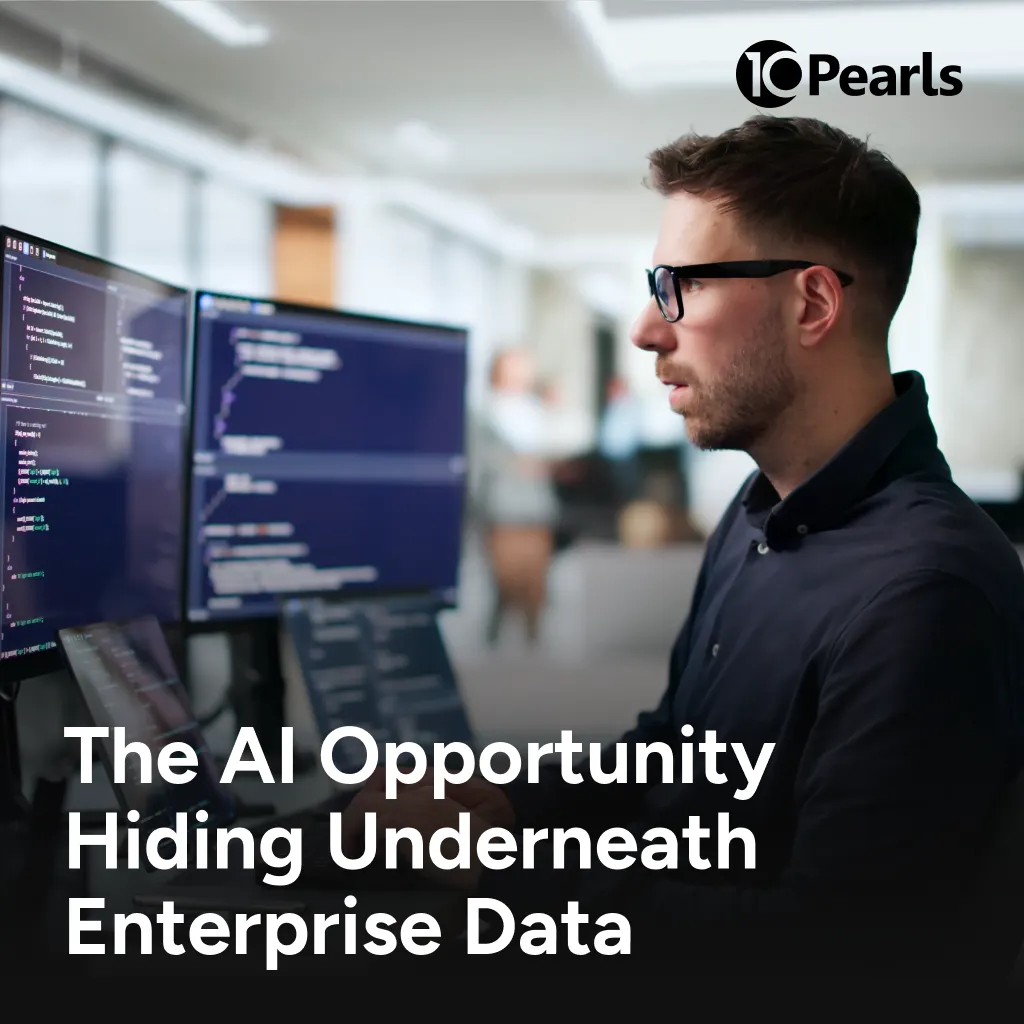
The AI Opportunity Hiding Underneath Enterprise Data

Summary

Traditional predictive systems often depend on manually engineered features that can limit how much context they extract from complex enterprise data. Transformer-based predictive models are capable of learning from richer sequences and relationships, creating new opportunities to improve risk detection, forecasting, and decision-making.

Enterprises are collecting more data than ever and investing heavily in AI, yet predictive systems still rely on human-defined signals. While these models can uncover patterns on their own, their analysis of the problem is often shaped by the signals and features humans choose. That leaves a larger question: if enterprises already have the data, where is the next major AI opportunity?

In his latest Forbes Technology Council article, Imran Aftab captures the opportunity simply, “What lies beneath the AI iceberg is not unused data, but unused context.”

Why more complex data requires a different approach

In the case of traditional predictive systems, data scientists will identify key variables, turn raw data into features, and train machine learning models to those choices. As enterprise data becomes more complex and interconnected, relying on manual feature engineering becomes harder to maintain. As behaviors shift and relationships multiply, teams must continually revisit features, thresholds, and assumptions to keep models aligned.

The predictive potential of transformers

Generative AI has largely entered organizations through capabilities like content generation, copilots, search, and workflow automation. However, the transformer architectures that power these tools can do much more than generate content.

Transformer-based predictive modeling offers a different approach, providing a richer picture of how a system behaves by learning from complex sequences and context, rather than relying on a predefined set of features. This enables organizations to make better use of the complexity their data already contains.

Turning hidden context into business value

In practice, that richer context and ability to identify subtle relationships across data can translate directly to tangible business value with applications in many different industries, for example sharper anomaly detection, earlier risk identification, better equipment forecasting, and deeper patient insights.

For enterprise leaders, this represents an important shift in how they think about predictive AI.

The question is moving from how much data an organization can collect to how effectively its models can understand the relationships within it.

Read the full article.

Insights

The AI Opportunity in Enterprise Data

AI/ML

The AI Opportunity in Enterprise Data

Enterprises have more data than ever, but traditional predictive approaches may not be suitable to capture the context within it....
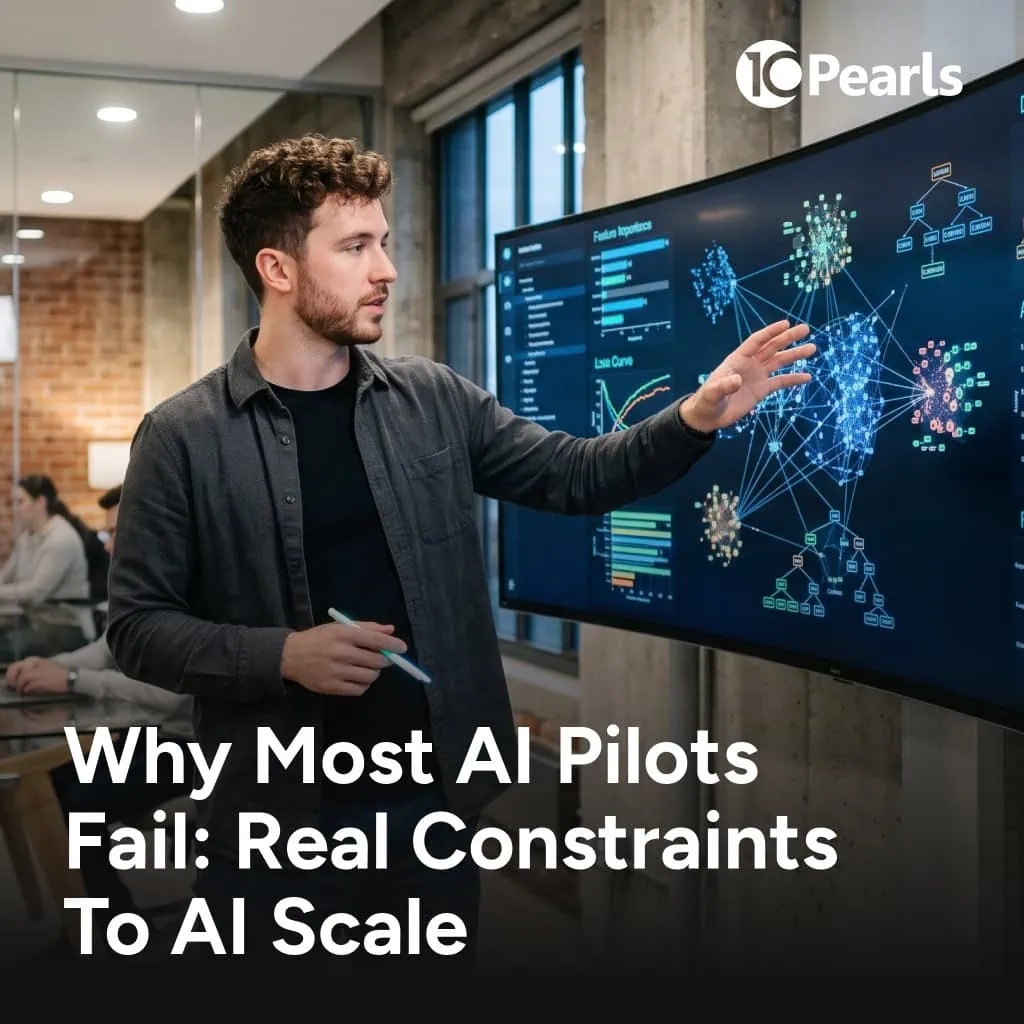
AI Pilot Failure: Why Enterprise AI Pilots Don’t Scale

AI/ML

AI Pilot Failure: Why Enterprise AI Pilots Don’t Scale

AI pilot failure often stems from execution gaps. Discover why enterprise AI pilots struggle to scale, and what it takes...
Understanding the uses of AI in energy sector

AI/ML

Understanding the uses of AI in energy sector

This blog explores how AI is transforming the energy sector, the opportunities it offers in various energy domains, and what...
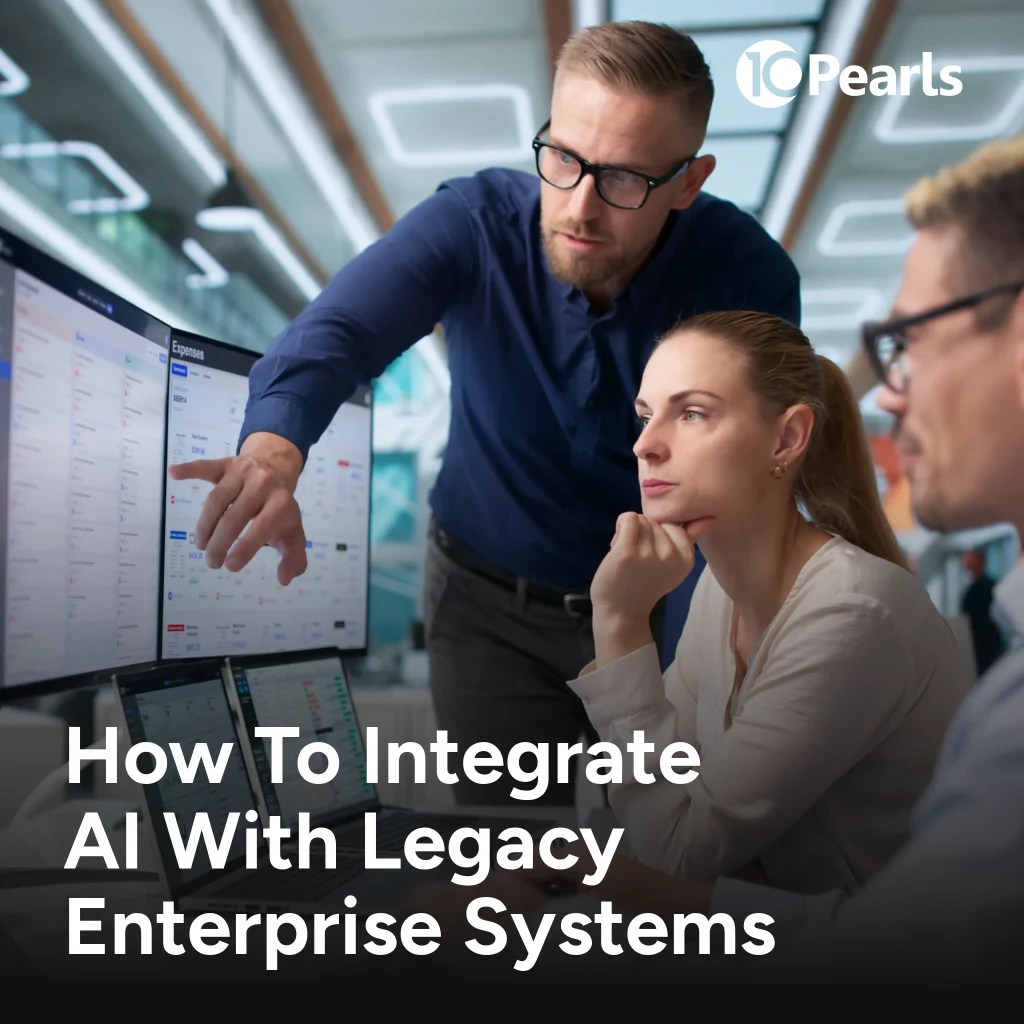
Integrating AI with Legacy Systems: Enterprise Guide

AI/ML

Integrating AI with Legacy Systems: Enterprise Guide

Four in five enterprises are struggling to connect AI to the systems they already run. Four proven strategies for bridging...
AI Adoption Challenges and How Enterprises Can Solve Them

AI/ML

AI Adoption Challenges and How Enterprises Can Solve Them

Explore the key enterprise AI adoption challenges businesses face, from data and governance to talent and strategy, and discover practical...
AI-powered DevOps in healthcare

AI/ML

AI-powered DevOps in healthcare

AI-powered DevOps in healthcare accelerates release cycles with smarter code review, self-healing test automation, and proactive monitoring, without risking compliance.
AI in Banking Use Cases: What Works and What Stalls

AI/ML

AI in Banking Use Cases: What Works and What Stalls

A guide to AI in banking use cases, from fraud detection to document processing, the risks that stall them, and...

What is Alternative Data in AI Credit Underwriting

AI/ML

What is Alternative Data in AI Credit Underwriting

The CFPB dropped disparate impact from ECOA in April 2026. Here is what that changed for AI credit underwriting, and...

Building Compliant System with Automated Regulatory

AI/ML

Building Compliant System with Automated Regulatory

Turn agentic AI from an experimental concept into a production-ready capability with guidance on architecture, development, evaluation, deployment, observability, and...
Generative AI implementation roadmap for enterprise

AI/ML

Generative AI implementation roadmap for enterprise

Learn what Banking as a Service (BaaS) is, how it powers embedded finance, and how non-banks integrate accounts, cards, payments,...

Privacy Overview
10Pearls Logo

This website uses cookies so that we can provide you with the best user experience possible. Cookie information is stored in your browser and performs functions such as recognising you when you return to our website and helping our team to understand which sections of the website you find most interesting and useful.

Strictly necessary cookies

Strictly necessary cookies should be enabled at all times so that we can save your preferences for cookie settings.

Third-party cookies

This website uses third party tools such as Google Analytics to collect anonymous information such as the number of visitors to the site, and the most popular pages.

Keeping this cookie enabled helps us to improve our website.