Healthcare Software Solutions
Build healthcare experiences
that drive growth & retention
Healthcare organisations need intelligent technology that does more than digitise existing processes.
We develop AI-powered healthcare solutions that enable providers accelerate decisions making, improve resource utilisation, and create better experiences across the care journey.
We helps make that shift by connecting software engineering, data, AI, and healthcare expertise
to the outcomes that matter most.
The state of healthcare technology
70%
of AI pilots never scale past testing HIMSS
$60–110B
in investment opportunity for AI McKinsey
70%
of healthcare orgs are using or exploring Gen AI McKinsey
$10.17B
by 2030 projected size of AI in medicine market Precedence Research
Types of healthcare software solutions
From patient engagement to clinical operations, explore healthcare software solutions that help organisations deliver better experiences, improve efficiency, and drive sustainable growth.
Patient & member experience software
Our healthcare technology solutions makes it easier for patients and members to manage health records and stay connected with providers. Personalised digital experience can improve patient engagement and make care more convenient.
- Enable patients to book, reschedule, & cancel appointments online via patient portal.
- Enable secure communication that gives patients timely answers while reducing calls and follow-ups.
- Give patients up-to-date medication information to support adherence and reduce treatment confusion.
- Authorise providers to access patient history for better patient support and coordinated care.
Mobile healthcare solutions help patients stay connected to their healthcare even when they are not at a doctor’s office. They support patients in keeping up with their health and managing their care.
- Give patients an easy way to track health data over time
- Create more personalised experiences and opportunities for proactive care.
- Keep patients connected to care teams through convenient digital interactions.
- Improve responsiveness and strengthen the overall care experience.
- Help patients quickly find the right provider or facility based on specialty, location, and availability.
- Collect patient information and required forms before the visit to reduce wait times.
- Confirm coverage and eligibility upfront to reduce billing issues, claim delays, and unexpected costs.
- Guide patients through digital check-in and next steps to reduce queues and simplify visits.
- Enable virtual visits that offer care while reducing wait times, and unnecessary appointments.
- Connect providers with digital prescribing workflows to speed up medication orders and reduce manual errors.
- Support virtual visits with caregivers or interpreters to make consultations easier to manage.
- Streamline management workflows to simplify and support task involving telehealth operations.
Communication platforms that help healthcare organisations deliver timely, personalised outreach while reducing manual follow-up and missed appointments.
- Send reminders across preferred channels to reduce staff effort required for manual follow-up.
- Automate follow-ups for patients due for screenings, checkups, or follow-up care to improve adherence.
- Provide relevant health information to help patients understand treatment and follow care plans.
- Enable two-way digital communication to keep patients connected while reducing calls.
- Gather patient feedback digitally to measure satisfaction, identify service gaps, and improve the overall care experience.
- Analyse patient engagement patterns and group audiences to deliver more relevant communications and targeted outreach.
Interoperability & integration solutions
- Keep patient records aligned across connected systems to reduce duplicate or outdated information.
- Connect EHR data with third-party applications so clinicians can complete tasks without leaving their primary workflow.
- Keep medication and prescription information synchronised to support safer and more efficient care.
- Share relevant provider, facility, and organisational data across applications to improve coordination.
- Migrate critical healthcare information between systems with less manual intervention and delay.
- Connect older healthcare applications with newer platforms without replacing the entire technology stack.
- Integrate external applications and services to expand platform capabilities and improve workflows.
- Track data flows and system performance to identify integration failures before they disrupt operations.
Standards-based integration that enables healthcare organisations to exchange structured information consistently across systems, applications, and care settings.
- Facilitate reliable exchange of clinical and administrative information between healthcare systems.
- Enable modern, API-based access to healthcare data for connected applications and digital services.
- Map data between systems to improve consistency and reduce integration errors.
- Align integrations with established healthcare data standards to support scalable connectivity.
Our Solutions are built on secure data sharing between providers and organisations, giving care teams a more complete view of patients across care settings.
- Give authorised providers access to relevant patient information across organisations.
- Transfer clinical records securely to support faster and more informed care decisions.
- Share referral information and supporting records to reduce delays in care transitions.
- Restrict sensitive information based on user roles, permissions, and organisational policies.
Centralised integration platforms that manage connections between healthcare applications, devices, data sources, and external services while reducing the complexity of maintaining multiple interfaces.
- Manage multiple healthcare integrations from a centralised environment to reduce operational overhead.
- Convert data between different formats so systems can exchange information without extensive manual processing.
- Coordinate data and processes across connected applications to reduce handoff delays.
- Detect failed transactions and support automated recovery to keep critical data flows moving.
Healthcare data, analytics & AI platforms
We help organisations improve clinical decisions by building data and intelligence platforms that turn fragmented healthcare information into actionable insights.
Centralised data platforms that bring clinical, operational, and financial information together, reducing data silos and creating a more reliable foundation for reporting, analytics, and care delivery.
- Connect data from EHRs, claims, labs, devices, and other systems into a unified data environment.
- Consolidate large healthcare datasets so organisations can analyse information faster and at scale.
- Identify incomplete, inconsistent, or duplicate data before it affects reporting or downstream workflows.
- Maintain consistent patient, provider, facility, and other core records across connected systems.
- Give teams real-time visibility into key clinical, staffing, and operational performance indicators.
- Identify revenue trends, reimbursement gaps, and cost drivers that affect financial performance.
- Show where staff, facilities, equipment, and other resources are being underused or overextended.
- Deliver organisation-specific reports that keep stakeholders focused on measurable business and care goals.
AI-powered solutions that automate high-volume work, surface predictive insights, and help healthcare organisations improve efficiency and clinical outcomes.
- Use historical and real-time data to support more informed decisions about likely patient outcomes.
- Assist clinicians in analysing medical images and identifying potential findings more efficiently.
- Automate repetitive administrative and operational tasks to reduce manual effort and processing time.
- Enable staff and patients for quicker access to information through natural-language interfaces and AI-powered support.
Platforms that help organisations identify high-risk populations, close care gaps, and coordinate interventions while improving health outcomes and managing costs.
- Segment patients by risk level so care teams can prioritise those who need attention most.
- Monitor and support patients with ongoing conditions to improve adherence and reduce avoidable complications.
- Detect missed or overdue care interventions that can negatively affect patient outcomes.
- Group patients by clinical, demographic, or behavioural characteristics to support targeted programmes.
Clinical & care delivery systems
Our team focuses on developing a core system that help clinicians spend less time searching for information and manual workflows. A healthcare solution that help organisations deliver more consistent care at scale.
- Maintain centralised patient data and medical histories so clinicians can access information faster.
- Standardise digital documentation to reduce paperwork, and keep clinical records complete and consistent.
- Enable providers to place orders and track results digitally to reduce processing delays and improve follow-up.
- Keep medication information organised and allow providers to send prescriptions electronically.
- Flag potential medication conflicts and allergies at the point of care to help clinicians prevent avoidable adverse events.
- Surface relevant clinical guidance within the workflow to support more consistent, informed treatment decisions.
- Assess patient-specific risk factors to help care teams identify high-risk patients and prioritise timely intervention.
- Monitor alerts and clinician override to reduce disruption and improve decision support.
Integrated systems facilitate collaboration among providers, specialists, and care teams throughout a patient’s journey, minimising communication errors and promoting consistent care.
- Give all authorised care teams a unified view of patient treatments, and next steps to improve continuity.
- Track referrals from initiation through completion to reduce delays, prevent lost referrals, and improve follow-through.
- Assign clinical and administrative tasks with clear ownership and escalation paths to keep care activities moving on time.
- Maintain clear visibility into care team roles and responsibilities to improve collaboration and ensure critical tasks reach the right people.
- Standardise clinical notes with templates and structured fields to reduce documentation time and improve record consistency.
- Digitise handoff processes to improve information continuity and reduce missed tasks during care transitions.
- Embed clinical protocols and checklists into workflows to reduce process variation and support safer care delivery.
- Automatically identify missing or inconsistent documentation to improve record quality and reduce compliance risks.
- Trigger timely alerts when patient data crosses thresholds so care teams can intervene as soon as possible.
- Turn ongoing health data into clear trends that help assess progress, and make more informed care decisions.
- Capture symptoms, treatment responses, and other patient-reported data between visits to give care teams a more complete view of patient health.
- Organise incoming patient data by urgency and risk so care teams can prioritise cases that need attention first.
Infrastructure & platform modernization
Our modernisation services help healthcare organisations replace ageing technology, improve system performance, and reduce the operational cost of maintaining legacy environments.
Modernisation services that transform ageing applications into easier-to-maintain architectures, helping reduce technical debt, improve performance, and lower the cost of ongoing support.
- Break modernisation into manageable stages to reduce disruption and maintain business continuity.
- Restructure legacy code to improve scalability, maintainability, and application performance.
- Run legacy and modern environments together where needed to reduce operational risk during migration.
- Remove outdated technologies and inefficient code that increase maintenance costs and slow future development.
Cloud transformation services that help healthcare organisations improve scalability, resilience, and infrastructure efficiency while maintaining the security controls healthcare workloads require.
- Build cloud environments that can scale with changing patient demand, workloads, and organisational growth.
- Apply identity, access, and security controls to protect sensitive healthcare workloads and data.
- Track cloud consumption and identify opportunities to reduce unnecessary infrastructure spending.
- Establish performance benchmarks to measure improvements and identify bottlenecks.
- Detect, prioritise, and resolve technology incidents quickly to minimise service disruption.
- Keep systems updated with controlled patching and releases that reduce security and stability risks.
- Optimise infrastructure capacity to maintain reliable performance without unnecessary resource costs.
- Regularly identify improvements that increase platform efficiency, resilience, and scalability.
Custom vs platform-based vs off-the-shelf healthcare software solutions
| Custom | Platform-based | Off-the-Shelf | |
|---|---|---|---|
| Upfront cost | Lowest | Moderate | Highest |
| Time to deploy | Fastest | Moderate | Longest |
| Workflow fit | Adapt your process to the product | Configurable within limits | Built to your process |
| Integration ceiling | Limited to vendor-supported connections | Extendable via platform APIs | No architectural ceiling |
| Ongoing ownership | Vendor-managed | Shared | You own it |
| Vendor lock-in risk | High | Moderate | Low |
| Best suited for | Standard functions with no differentiation value | Common needs with organisation-specific variations | Workflows that are core to how you compete or deliver care |
Healthcare organisations we work with
Healthcare providers & health systems
Providers need technology that improves care delivery without adding complexity or disrupting established workflows. We build healthcare software solutions that improve clinical operations, connect healthcare systems, and automate workflows to improve efficiency while supporting better care experiences.
Health plans & payers
Payers are expected to streamline claims operations, engage members, and increase administrative efficiency while controlling medical costs. Our payer software solutions can automate complex workflows, connect critical data, and help teams make faster more informed decisions.
Healthtech companies
Healthtech enterprises need products that can scale commercially while meeting security needs, interoperability, and regulatory expectations. Our product engineering development team builds and supports connected platforms, digital health applications, AI-enabled products, and data-intensive solutions.
Healthcare life sciences companies
Life sciences companies need technology that supports clinical development, R&D, patient engagement, and commercialisation in highly regulated environments. Our product engineering teams build and support digital platforms, data and analytics solutions, AI-enabled products, and applications that strengthen research, operations, and patient outcomes.
Our regulatory expertise for healthcare software
Regulatory requirements influence healthcare architecture from the first design decision. We bring deep healthcare expertise and security practices to help organisations address privacy, security, AI, and regional requirements from the start.
| Framework | What it governs | Who it applies to |
|---|---|---|
| HIPAA Privacy Rule | Protected health information and privacy | Covered entities and business associates |
| HIPAA Security Rule | Electronic protected health information | Covered entities and business associates |
| HITECH Act | Health IT adoption, privacy, and security | Healthcare organisations and technology ecosystem |
| 21st Century Cures Act | Health innovation and information access | Healthcare organisations, developers, and other stakeholders |
| ONC HTI-1 | Health IT certification and interoperability | Certified health IT ecosystem |
| CMS requirements | Medicare and Medicaid programmes | Participating providers and organisations |
| FDA regulations | Medical products and related technologies | Manufacturers and regulated organisations |
| FDA SaMD | Software as a medical device | Organisations developing qualifying medical software |
| GDPR | Personal data and privacy | Organisations processing EU personal data |
| EU MDR | Medical devices in the EU | Medical-device manufacturers and related organisations |
| EU AI Act | AI systems and associated risk obligations | Organisations developing or deploying covered AI systems in the EU |
| ISO/IEC 27001 | Information security management | Organisations establishing an ISMS |
| SOC 2 | Service-organisation controls | Applicable technology and service organisations |
| HITRUST CSF | Security, privacy, and risk controls | Healthcare and other organisations |
| NIST Cybersecurity Framework | Cybersecurity risk management | Organisations across industries |
Security and compliance built into every solution
10Pearls is ISO/IEC 27001:2022 certified and has experience supporting healthcare organisations with security, compliance, and regulated technology requirements.
Healthcare standards & code systems we work with
| Standard | What it does | Where it is used |
|---|---|---|
| HL7® FHIR® R4/R5 | RESTful framework for exchanging healthcare data | APIs, apps, EHR integration, digital health |
| HL7® v2.x | Messaging standard for clinical and administrative data | Hospitals, labs, admissions, orders, results |
| HL7® C-CDA® | Structured clinical document exchange | Clinical summaries and health information exchange |
| DICOM | Standardises medical imaging information | Radiology, imaging systems, medical devices |
| IHE profiles | Defines implementation patterns for interoperability | Cross-system clinical workflows |
| SNOMED CT® | Standardised clinical terminology | Diagnoses, findings, procedures, clinical concepts |
| LOINC® | Standardised codes for measurements and observations | Laboratory results and clinical observations |
| RxNorm | Standardises medication terminology | Medication records and prescribing |
| ICD-10-CM/PCS | Diagnosis and procedure classification | Coding, billing, reporting |
| CPT® | Codes professional medical services | Physician billing and reimbursement |
| HCPCS | Codes healthcare products and services | Medicare, Medicaid, and payer claims |
| NCPDP SCRIPT | Standardises electronic prescriptions | Pharmacy and medication workflows |
| X12 EDI | Standardises electronic business transactions | Claims, eligibility, payments, healthcare administration |
Why healthcare organisations choose 10Pearls
Healthcare domain depth
Create experiences that keep patients engaged and coming back. Our healthcare expertise helps turn technology into better experiences, stronger retention, and greater customer value.
Security & compliance leadership
Build trust that strengthens patient loyalty. We embed security and compliance from the start, helping organisations protect patient data, meet regulatory requirements, and deliver secure digital experience.
Interoperability engineering
Connect every touchpoint to create a more seamless experience. Integrated systems enable personalised customer experiences and deliver seamless interactions across every channel.
AI expertise built for healthcare
Turn AI potential into practical healthcare solutions. We combine healthcare expertise, responsible AI, and engineering to build solutions across clinical, patient, and operational workflows.
Global delivery flexibility
Scale healthcare technology teams as needs evolve. Our global delivery model helps healthcare organisations expand teams and accelerate delivery as priorities change.
How we engage with healthcare organisations
Build
New product development, custom platforms, and modernisation of systems that can no longer keep up. Best when you have a defined problem and need engineering capacity to solve it.
Run
Managed and co-managed IT, platform operations, and ongoing support. Best when the systems exist and the constraint is capacity to operate them reliably.
Advise
AI strategy, technology assessment, and road mapping. Best when the direction is not yet settled and the cost of choosing wrong is high.
Ready to build your healthcare solution?
Our healthcare case studies
Case study - HEALTHCARE
Caregiver Support Platform
Empowering caregivers with an all-in-one support platform that streamlines access to key resources, allowing them to focus on delivering quality care.

Case study - healthcare
Automated Claims Management System
Building a claims matching system to overcome data complexity and variability leading to inaccuracies and mismatches in prior authorisations.

Case study - healthcare
Accelerating Care Delivery with Intelligent Automation
Driving patient engagement, data visibility, and operational efficiency with Salesforce-driven solutions.

Case study - healthcare
Modernising Medical Device Tracking
Empowering field service teams with real-time, precise modelling and practical insights for optimal customer support and enhanced operational effectiveness.
Insights
Healthtech
Interoperability in Healthcare: Levels, Barriers & AI Readiness
Healthcare AI needs reliable, connected data. Learn how interoperability helps organizations improve data quality, simplify integration, and build the foundation...
Healthtech
AI-powered DevOps in healthcare
AI-powered DevOps in healthcare accelerates release cycles with smarter code review, self-healing test automation, and proactive monitoring, without risking compliance.
Healthtech
Boost efficiency and outcomes with practical AI healthcare solutions
While bold ideas tend to dominate the conversation, real-world adoption remains relatively slow. This disconnect stems from an industry-wide focus...
Healthtech
Integrating innovative technologies to transform key prior authorisation services
Discover how automated decision support is transforming the prior authorisation process, and see how 10Pearls Health emerges as a strategic...
Healthtech
Using AI to solve challenges in healthcare payer operations
Generative AI has revolutionized financial management, bringing about a new standard for efficiency and precision. Processes like financial analysis and...
Healthtech
Revolutionising payer engagement, enhancing member satisfaction, and improving health outcomes
Revolutionising Payer Engagement, Enhancing Member Satisfaction, and Improving Health Outcomes.
Healthtech
Full clinical snapshot – unifying data for population health
In today's dynamic healthcare landscape, seamless access to comprehensive patient data stands as a cornerstone for informed decision-making and optimal...
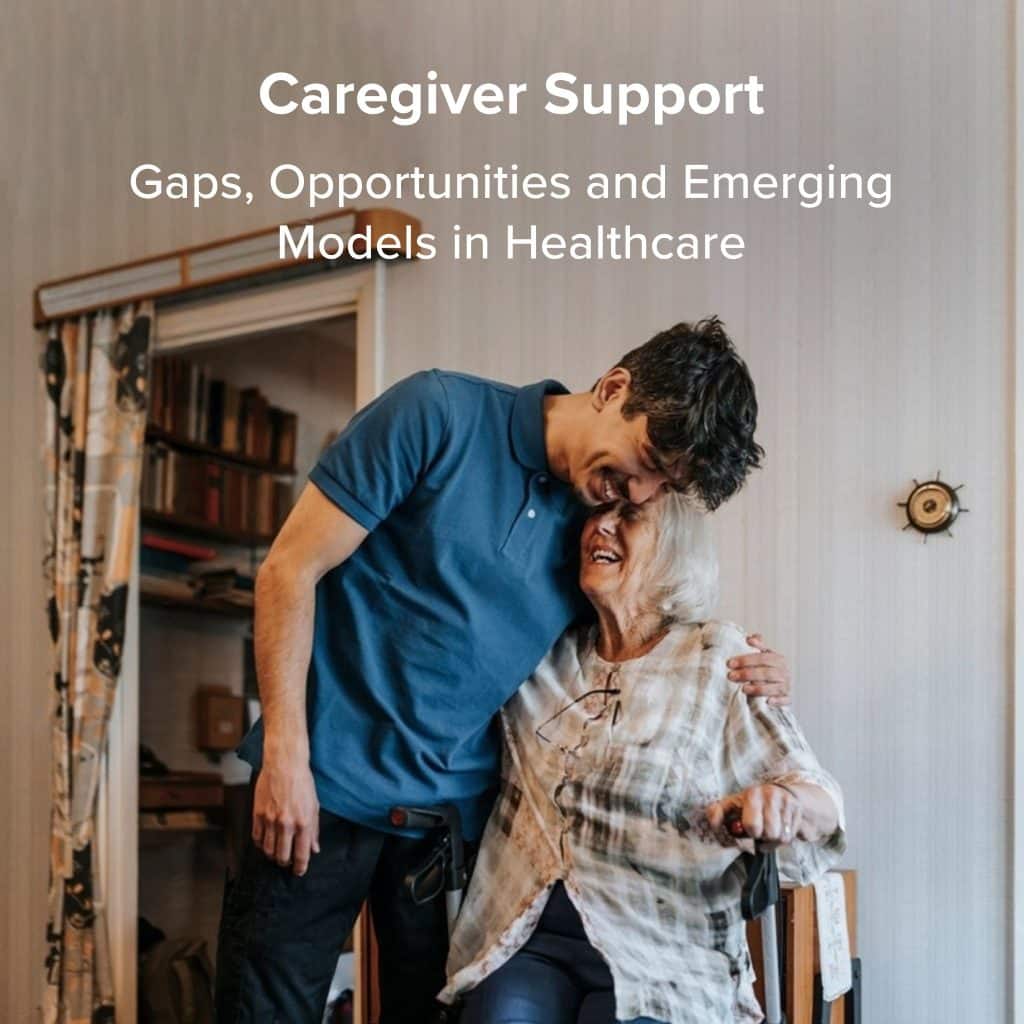
Healthtech
Caregiver support services in US healthcare: Gaps and opportunities
Anyone caring for an older loved one with complex chronic conditions, disabilities, cognitive decline, or age-related frailties knows the practical,...
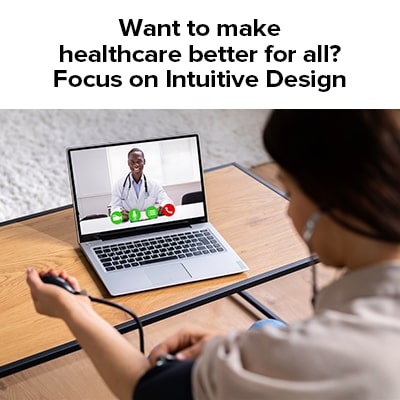
Healthtech
Enhance digital healthcare for all: The importance of intuitive design
It’s no secret that the patient healthcare journey is a daunting one- full of uncertainty, isolation, and anxiety.
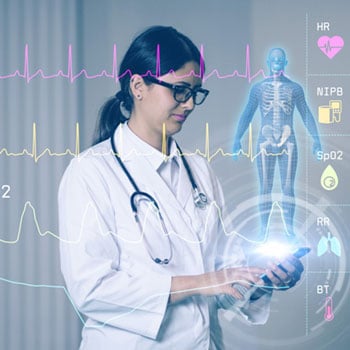
Healthtech
How IoMT (the Internet of Medical Things) is disrupting healthcare
In this post, we’ll discuss how IoMT (Internet of Medical Things) is disrupting the health industry and what applications we...
FAQs about healthcare software solutions
What types of healthcare software are there?
Healthcare software includes EHR/EMR systems, patient portals, telehealth platforms, remote patient monitoring, healthcare CRM, billing systems, and clinical decision-support tools. 10Pearls helps organisations design and build secure, scalable solutions around their specific needs.
Should we build custom healthcare software or buy an existing platform?
Buy a solution when it meets your basic needs. Create a custom solution when you need special features, connections, or unique experiences for patients. 10Pearls helps healthcare organisations look at different choices and pick the one that provides the most lasting benefits.
What is the difference between an EHR and an EMR?
Which data standards does healthcare software need to support?
What regulations apply to a patient-facing healthcare application?
Requirements vary based on the market and the kind of data being used. In the U.S, HIPAA is an important rule that organisations must follow. They also need to think about other rules like FDA guidelines, GDPR, state privacy laws, and any other relevant regulations.
What makes healthcare software different from other enterprise software?
What does healthcare interoperability actually require?
Interoperability works on integrated systems like EHRs and health information exchanges. Moreover, organisations must follow standardised data formats, APIs, secure data exchange, and integrated systems like EHRs and health information exchanges. 10Pearls helps organisations connect disparate systems while maintaining data security and integrity.
How is AI regulated in healthcare?
AI regulations are shaped by factors such as its purpose, the level of risk involved, the setting in which it operates, and its repercussions on healthcare decisions. Healthcare AI should focus on privacy, being open about its processes, avoiding unfair treatment, ensuring safety, keeping information secure, and following medical device rules. 10Pearls helps organisations include rules and human supervision in their AI systems.
How do you evaluate a healthcare software development partner?
How long does a healthcare software implementation take?
Timelines can vary based on the project’s scale, the scope of integration requirements, compliance with regulations, necessary modifications, and data migration. A straightforward solution might take a few months, but complicated business setups can take much longer. 10Pearls uses an outcome-focused approach to help organisations move from strategy to implementation efficiently.